See jobs we've picked just for you


















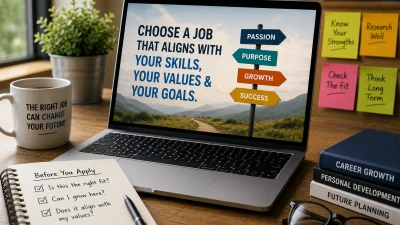
How to Choose the Right Job Before You Apply
In today's competitive job market, the instinct is to apply everywhere and hope something sticks. But that approach often leads to interviews you're not prepared for, offers you're not excited about, and jobs you leave within a year. The real edge isn't applying more — it's applying smarter. Before you send out your next application, here's how to ensure the role is genuinely right for you.1Start With Self-Awareness, Not Job BoardsMost people open a job portal before they've asked themselves a single honest question about what they actually want. That's like going grocery shopping when you're hungry and have no list — you end up with things that look good in the moment but don't serve you long-term.Before browsing listings, take thirty minutes to map your skills, interests, and working style. What kind of tasks make you lose track of time? What environments have brought out your best work — fast-paced startups, structured corporations, or independent settings? Where have managers consistently praised you, not just for effort, but for genuine output?Write down your top 5 hard skills and top 3 soft skillsRecall the last time you felt truly proud of your work — what were you doing?List roles or tasks that consistently drain your energy — these are your filters2Read the Job Description Like a DetectiveA job description is not just a list of requirements — it's a window into the company's priorities, team health, and how they think about the role. Most candidates skim it to check if they're qualified. Smart candidates read it to decide if the role is worth their time.Pay attention to how responsibilities are framed. Are they specific and measurable, or vague and open-ended? Phrases like "fast-paced environment," "self-starter," or "ability to work under pressure" can indicate either an exciting challenge or a disorganized team that expects employees to figure things out on their own. Neither is automatically bad — but you should know which one you're walking into.Also notice what's missing. A good job description mentions team size, reporting structure, and growth path. If none of those appear, it's worth asking in the interview — or questioning whether the company has thought it through at all.Check if responsibilities align with where you want to grow, not just where you've beenNote any contradictions — a "junior" title with "5 years of experience" required is a red flagGoogle the role title + company name to see if it has been reposted multiple timesGrowth scope clear? Team structure mentioned? Vague or contradictory? Reposted often?3Research the Company Beyond Its WebsiteA polished careers page tells you what a company wants you to think about them. Employee reviews, news coverage, and LinkedIn data tell you the truth. Before applying anywhere, spend at least 15 minutes doing real research.Check Glassdoor and similar platforms — not just the rating, but the patterns in reviews. Are people consistently mentioning poor management? High turnover? Broken promises around promotions? These aren't isolated opinions — they're signals. On LinkedIn, look at how long employees in similar roles have stayed. If the average tenure is under a year, that's a story worth paying attention to.Also check for recent company news. Has the company raised funding recently or gone through layoffs? Has leadership changed? Is the business growing or contracting? These factors affect your job security, your manager's stability, and your opportunities for growth.Read the most recent Glassdoor reviews — especially the critical onesCheck LinkedIn for employee tenure in the department you'd be joiningSearch "[Company name] layoffs / news / culture" for unfiltered insights4Evaluate Compensation as a Full PackageSalary is important, but it is rarely the complete picture. Two offers with the same headline number can be wildly different in actual value once you factor in benefits, flexibility, learning opportunities, and long-term earning potential.A role that pays slightly less but comes with strong mentorship, a clear promotion path, and skills you can monetize in 18 months may outperform a higher-paying dead-end job over a three-year horizon. Think in terms of career ROI, not just current compensation.At the same time, know your market worth. Use platforms like Glassdoor, AmbitionBox, or LinkedIn Salary Insights to benchmark what people in similar roles are earning in your city. Walking into any conversation — whether it's a first interview or a final offer — with that data puts you in a far stronger position.Ask about appraisal cycles, increment percentages, and promotion timelinesFactor in work-from-home policy, travel requirements, and health benefitsConsider learning budgets, certifications, and access to tools or conferences5Check If the Role Aligns With Your ValuesSkills get you hired. Values keep you motivated. A role can check every box on paper — great pay, reputable brand, solid title — and still feel wrong three months in if it doesn't align with what genuinely matters to you.Think about your non-negotiables. Is autonomy important to you, or do you thrive with structure? Do you need to believe in the company's mission to do your best work? Are you at a stage where learning matters more than money, or vice versa? Being honest about these priorities before you apply prevents the disappointment of accepting a role that looked right but felt wrong.Also pay attention to the people you'd be working with. Research your potential manager on LinkedIn — their background, how long they've been in that role, and how their team members describe their tenure. Your direct manager has more influence on your day-to-day experience than almost any other factor.Rank your current priorities: stability, growth, impact, flexibility, or incomeCheck if the company's stated mission is something you can genuinely connect withLook up your potential manager — how long have they been there? How is their team doing?6Use a Simple Three-Question Test Before ApplyingAfter doing your research, there's one final step before you submit that application. Pause and honestly answer three questions. Not what you hope is true — what you actually believe based on what you've found.These aren't trick questions. They're a gut check to make sure you're applying from a place of genuine interest and informed confidence, not just availability or desperation.The Pre-Apply ChecklistCan I genuinely see myself growing and contributing here for the next two years?Will this role position me better for my next opportunity, whatever that turns out to be?Am I excited enough about this role to prepare thoroughly and show up at my best?If all three answers are yes — apply with everything you've got. If one is uncertain, decide whether more research would resolve it. If two or more are no, the role may simply not be the right fit at this time.A final word: Applying out of desperation almost always leads to the wrong outcome. Urgency clouds judgment, and accepting a poor-fit role just to "have something" typically means starting the job search again within 12 months. One right opportunity — one role you've researched, prepared for, and genuinely want — is worth far more than a dozen rushed applications.Ready to apply smarter? SearchTalents connects you with opportunities that match your skills, values, and career goals. Browse curated roles today and take the next step with confidence.Better reference links (non-competitor + credible):Harvard Business Review – Career Planning — Career decisions, workplace growth, job fit.Society for Human Resource Management (SHRM) — Hiring trends, workplace insights, recruitment best practices.Glassdoor Career Advice — Company reviews, salary trends, workplace culture research.AmbitionBox — India-focused salary benchmarking and company reviews.MindTools Career Development — Self-assessment, career planning, work style understanding.U.S. Bureau of Labor Statistics Occupational Outlook Handbook — Career growth and industry insights.McKinsey Career Insights — Workplace and employment trend reports.#JobSearch #CareerGrowth #JobTips #CareerAdvice #JobApplication #HiringTips #CareerPlanning #JobSeekers #ProfessionalGrowth #WorkLife #InterviewTips #CareerSuccess #EmploymentTips #DreamJob #SearchTalents #JobReadyPlacements #JobOpportunities #CareerDevelopment #SmartJobSearch #HiringTrends
 24-May-2026

Applied Everywhere but Still No Job? Here’s What You Need to Change
Job search can feel very frustrating when you are applying again and again but still not getting interview calls. You send your resume, wait for a response, check your email many times, but nothing happens. Many job seekers face this problem, and it does not always mean they are not skilled or capable.Sometimes the real problem is not your talent. The problem is your job search strategy.If you are applying everywhere but still not getting a job, it may be time to stop applying randomly and start applying smartly.Why Applying Everywhere Does Not WorkMany candidates think that the more jobs they apply for, the better their chances will be. But applying to every job without checking the role properly can actually reduce your chances.Employers are not only looking for someone who needs a job. They are looking for someone who matches their requirements. If your resume does not clearly show that you are suitable for the role, your application may get ignored.Sending the same resume to every company makes your application look general. A general resume does not tell the employer why you are the right fit for that specific job.Your Resume May Not Be Matching the JobOne of the biggest reasons candidates do not get responses is that their resume does not match the job description.For example, if a company is hiring for a customer service role, they want to see skills like communication, problem-solving, customer handling and complaint resolution. If your resume does not highlight these skills clearly, the recruiter may not shortlist you.Before applying, read the job description properly. Check what skills and experience the employer wants. Then update your resume to show the most relevant points.You do not need to change your whole resume every time, but you should adjust your summary, skills and experience according to the job.Stop Using the Same Resume for Every JobUsing one resume for all applications is one of the most common mistakes job seekers make. Every job is different, so your resume should also be slightly different for each role.If you are applying for an admin role, highlight office support, scheduling, data entry and organisation skills. If you are applying for a sales role, highlight customer interaction, lead generation, communication and targets.A customised resume shows the employer that you understand the role and have taken time to apply properly.Show Results, Not Just DutiesMany resumes only list basic duties. For example:Handled customer callsManaged daily tasksWorked with the teamUpdated recordsThese lines are very common and do not make your resume stand out. Employers want to know what value you added.You can write stronger points like:Handled daily customer enquiries and helped improve response timeManaged office records accurately and supported smooth daily operationsAssisted team members with admin tasks and improved workflow efficiencySupported customers with product information and resolved basic complaintsEven simple improvements can make your resume look more professional.Apply for the Right JobsApplying for jobs that do not match your skills can waste your time. Before applying, ask yourself:Do I have most of the required skills?Is this role suitable for my experience level?Can I do the main duties mentioned in the job description?Does the location, salary and work type suit me?You do not need to match every single requirement, but you should match the main ones. Focus on jobs where your profile has a real chance.Quality applications are better than random applications.Improve Your LinkedIn ProfileRecruiters often check LinkedIn before contacting candidates. If your LinkedIn profile is incomplete or outdated, it can create a weak impression.Your LinkedIn profile should have a professional photo, clear headline, updated work experience and relevant skills. Your headline should not only say “Looking for job.” It should show what type of role you are looking for.For example:Customer Service Professional | Strong Communication & Problem-Solving SkillsAdmin Assistant | Office Support | Data Entry | SchedulingDigital Marketing Executive | SEO | Social Media | Content MarketingA strong LinkedIn profile supports your resume and helps recruiters understand your profile better.Do Not Just Apply and WaitMany job seekers apply for a job and then simply wait. But sometimes a short follow-up message can help you stand out.After applying, try to find the recruiter or hiring manager on LinkedIn. Send a simple and polite message.You can write:Hi, I recently applied for the role and wanted to express my interest. I have relevant experience and would be happy to share more details if required. Thank you for your time.Keep it short. Do not send long messages or follow up too many times.Avoid Small MistakesSmall mistakes can hurt your chances more than you think. Before sending your application, check everything carefully.Make sure your phone number and email are correct. Use a professional email address. Check spelling and grammar. Keep the resume format clean. Do not make your resume too long. Avoid adding unnecessary personal details.A clean and error-free resume creates a better first impression.Track Your ApplicationsMany job seekers apply to multiple jobs but do not track them. This creates confusion later.Make a simple list with company name, job title, date applied, status and follow-up date. This helps you stay organised and follow up at the right time.Tracking your applications also helps you understand what is working and what is not.Prepare Before the Interview Call ComesDo not wait for an interview call to start preparing. Start early.Practice common interview questions. Prepare your introduction. Learn how to explain your work experience clearly. Think about examples where you solved problems, helped customers, managed tasks or worked in a team.When you are already prepared, you will feel more confident during interviews.What You Need to ChangeIf you are applying everywhere but still not getting a job, change your approach.Apply to jobs that match your skills. Customise your resume. Highlight achievements. Keep your LinkedIn updated. Follow up professionally. Avoid errors. Keep learning. Track your applications.Job search is not only about applying more. It is about applying better.Final ThoughtsNot getting job responses can feel discouraging, but it does not mean you should give up. Sometimes a few small changes can make a big difference.Your resume should clearly show your value. Your applications should be targeted. Your follow-up should be professional. Your skills should stay updated.Instead of applying everywhere, focus on the right opportunities and present yourself in the best way.A smarter job search can bring better results, better interviews and better career opportunities.Refrenceshttps://www.glassdoor.com/blog/guide/how-to-write-a-resume/https://www.glassdoor.com/blog/6-resume-mistakes/https://www.roberthalf.com/us/en/insights/landing-jobhttps://www.hays.com.au/career-advice/job-searchhttps://www.michaelpage.com.au/advice/career-advicehttps://www.seek.com.au/career-advicehttps://www.theverge.com/news/771210/linkedin-recruiter-executive-verification-mandatoryhttps://www.wsj.com/lifestyle/careers/scammers-are-stealing-recruiters-identities-to-target-job-seekers-7d5b2c96#JobSearch #CareerAdvice #ResumeTips #JobSeekers #NoInterviewCalls #JobApplicationTips #ResumeMistakes #CareerGrowth #HiringTips #RecruiterTips #JobSearchStrategy #InterviewPreparation #SmartJobSearch #CareerSuccess #SearchTalents
21-May-2026

Australia’s Hiring Crisis in 2026: Why Skilled Workers Are in Massive Demand
Australia is facing a major workforce shortage in 2026. Across industries like healthcare, construction, hospitality, logistics, and technology, employers are struggling to find skilled workers fast enough to meet growing demand.At the same time, recruitment methods are changing rapidly. Companies are now using AI-powered hiring systems, faster recruitment processes, and skills-based hiring strategies to secure top talent before competitors do.For job seekers, this creates both challenges and opportunities.Candidates with practical skills, industry readiness, and smart job search strategies are finding better career opportunities faster than ever before.Why Australia Is Facing a Worker ShortageSeveral factors are contributing to Australia’s hiring crisis:Rapid business growth after economic recoveryIncreasing infrastructure and construction projectsGrowing demand in healthcare and aged careDigital transformation across industriesLack of skilled workers in key sectorsFaster employee turnover and retirement ratesBecause of this, employers are actively searching for qualified candidates and are often willing to hire quickly to avoid losing talent.Industries Hiring the Most Workers in 2026Healthcare & Aged CareAustralia’s ageing population continues to increase demand for nurses, caregivers, disability support workers, and healthcare assistants.Construction & TradesInfrastructure development projects are driving demand for:BuildersElectriciansPlasterersTilersCivil construction workersInformation TechnologyCompanies are hiring professionals in:CybersecuritySoftware DevelopmentCloud ComputingAI & Data AnalyticsHospitality & TourismHotels, restaurants, cafes, and tourism operators are urgently hiring skilled staff due to increasing travel demand.Logistics & DeliveryThe rise of eCommerce and supply chain expansion has created strong demand for drivers, warehouse workers, and logistics coordinators.How Recruitment Has Changed in 2026Traditional hiring methods are no longer enough for many employers.Modern recruitment now focuses on:AI-powered resume screeningSkills-based hiringFaster interview processesDirect recruiter outreachDigital recruitment platformsMany companies now shortlist candidates within days instead of weeks.This means job seekers must act faster and prepare smarter applications.Why Skills Matter More Than DegreesOne of the biggest hiring trends in Australia is the shift toward practical skills.Employers now prioritize candidates who can demonstrate:Real-world experienceIndustry certificationsCommunication skillsAdaptabilityTechnical knowledgeProblem-solving abilityInternships, vocational training, and short professional courses are becoming increasingly valuable in the hiring process.Smart Strategies Job Seekers Should FollowBuild an ATS-Friendly ResumeMany companies use Applicant Tracking Systems (ATS). Resumes should include:Clear formattingRelevant keywordsSkills matching the job descriptionUpdated experience and certificationsApply EarlyRecruiters often review applications immediately after posting jobs online. Early applicants usually gain better visibility.Improve Online PresenceAn updated LinkedIn profile and professional digital presence can help recruiters discover candidates directly.Focus on High-Demand SkillsCandidates should continuously improve practical skills related to industries facing worker shortages.Use Trusted Recruitment PlatformsModern recruitment websites help candidates discover better opportunities faster.Platforms like CareerFinders.co and JobReadyPlacements.com.au are helping job seekers connect with employers, internships, and career opportunities across Australia.Opportunities for International StudentsInternational students in Australia are also benefiting from growing demand in sectors facing skill shortages.Students with:Local internship experienceIndustry certificationsCommunication skillsFlexible work availabilityare finding better pathways into long-term employment opportunities.Many employers now value practical work readiness over academic qualifications alone.Final ThoughtsAustralia’s hiring landscape in 2026 is evolving quickly. While competition remains strong, employers are actively searching for skilled, adaptable, and job-ready candidates.For job seekers, the key to success is simple:Build practical skillsStay updated with industry trendsApply strategicallyUse professional recruitment platformsRespond quickly to opportunitiesCandidates who understand modern recruitment trends will have a significant advantage in today’s fast-moving job market.References & Research SourcesAI in Recruitment TrendsIBM AI Recruitment ResearchSkills-Based Hiring ReportRandstad Workforce InsightsAustralian Job Vacancy StatisticsAustralian Bureau of Statistics – Job VacanciesBest Job Sites & Modern Job Search TrendsAPM Australia Job Search GuideFuture Recruitment Trends in AustraliaMichael Page Australia Hiring InsightsNetworking & Hidden Job Market StrategiesOutplacement Australia Job Search StrategiesAustralian Government Job Hunting ResourcesServices Australia – Job Hunting SupportAustraliaJobs #JobsInAustralia #CareerGrowth #HiringNow #JobSearch #Recruitment #Careers2026 #AustralianJobs #SkilledWorkers #JobOpportunities #AIRecruitment #FutureOfWork #HiringTrends #InternationalStudents #CareerAdvice #ResumeTips #ATSResume #WorkInAustralia #JobSeekers #Recruiters #EmploymentAustralia #JobReady #CareerFinders #JobReadyPlacements #HiringAustralia #SkillsBasedHiring #ProfessionalGrowth #JobsAndCareers #AustralianEmployers #GraduateJobs
19-May-2026